Built From 25 Years at the Bedside.
In over 25 years of practicing medicine in Washington DC, Dr. Manisha Singal watched the same thing happen again and again. Patients left the clinic with a plan. Weeks later they returned in crisis, not because they did not care, but because no one was watching in between. Cardioplace is the answer to that gap.

Cardioplace Assistant
Good morning, Maria. How is your blood pressure today?
148 over 92
That is higher than your average this week. Have you taken your medication this morning? I am going to let your care team know and someone will follow up with you today.
Alert sent to care team
The question that changed everything.
For over 25 years I practiced medicine on the reactive side of cardiovascular disease. I received patients after the stroke. After the heart attack. After the kidneys had failed. After blood pressure that had been climbing for months, sometimes years, finally announced itself as a crisis.
At the bedside, families would find me. And they would ask me the same two questions, over and over, in different words but always the same meaning.
Could this have been prevented? How do I make sure this does not happen to me?
The honest answer to the first question was almost always yes. Not always. But almost always. The tools existed. The medications worked. What was missing was the watching. The continuous thread of monitoring and connection that keeps a patient safe between one clinical visit and the next. What was missing was a way to close the gap.
That gap frustrated me for years. I wanted to be meaningful in my patients’s lives before the crisis, not only after it. I wanted to give families a real answer to their second question. Not just advice about diet and exercise and come back in three months. A real answer. A real solution.
That desire led me here. It extended first to wanting to protect the people closest to me. Then it grew to the community I have served for 25 years, the patients in Washington DC who face that gap most acutely, who have the fewest resources to close it, and who deserve the same quality of continuous care as anyone else.
Cardioplace is the answer I have been trying to build since the first time a family asked me that question.
Dr. Manisha Singal, Co-Founder and CEO
Supported by the DC Hospital Association
Cardioplace is supported by the DC Hospital Association, the organization that convenes all 13 hospitals in Washington DC.
Closing the cardiovascular safety gap requires both institutional reach and clinical technology working together. The DC Hospital Association has supported that effort from the outset.
Cardioplace builds and operates the technology platform, with the DC Hospital Association supporting the effort. The program is being implemented first in Wards 7 and 8, the communities east of the Anacostia River where cardiovascular disease kills at twice the rate of other DC neighborhoods.
Cardioplace is being deployed with clinical sites serving some of the most vulnerable residents in Washington DC. It is designed to extend that care into the gaps between visits.
Why We Built This
"The most dangerous moment in a cardiovascular patient's care is not the hypertensive crisis that brings them to the emergency department. It is the six weeks before, when no one was watching."
- Dr. Manisha Singal, Co-Founder and CEO
The gap between visits is where patients are most vulnerable.
Medication errors, uncontrolled blood pressure, missed warning signs, these happen at home, not in the clinic. That is where we work.
Literacy should never determine who gets safe care.
One in three American adults struggles with health-related reading. Almost none of them say so. Our platform never asks.
Language should never be a barrier.
Check-ins are available in English, Spanish, French, German, and Amharic, with additional languages in development. Voice interaction means language and literacy barriers disappear entirely.
Sustainability cannot depend on grants.
CMS Remote Patient Monitoring billing means the platform generates recurring revenue for participating hospitals from the first month of enrollment. This program is designed to outlast its funding.
Every alert follows physician-set clinical rules.
Cardioplace does not guess. Every alert follows explicit rules written and signed off by physicians, grounded in established cardiovascular guidelines such as those from the AHA and ACC. Thresholds are personalized to each patient's conditions, medications, and age, so the same reading can mean different things for different people, exactly as a clinician would judge it.
Silent Literacy Architecture
Every other health literacy platform asks patients to declare what they need. Cardioplace watches instead.
Response latency. Modality choice. Teach-back accuracy. The platform reads these signals passively and adapts communication automatically, delivering voice, text, or a combination based on what each patient actually does, not what they say they prefer.
No patient is ever evaluated. No patient is ever labelled. Dignity is not an accommodation. It is the default.
How We Got Here
2024 - The Clinical Insight
Dr. Manisha Singal begins developing the conceptual framework for a cardiovascular monitoring platform designed specifically for patients with limited health literacy. The insight: the problem is not information. It is the gap between visits where no one is watching.
Early 2025 - The Technology Foundation
Rengan Rajaratnam and the engineering team begin building the platform architecture, forking an existing Cardioplace wellness application and rebuilding it for cardiovascular clinical deployment.
Late 2025 - DCHA Support
The DC Hospital Association connects with Dr. Singal, recognizing that closing the cardiovascular safety gap requires both institutional reach and clinical AI technology. DCHA begins supporting the effort.
January 2026 - Ward 7 and Ward 8
The program targets Washington DC’s highest-burden communities east of the Anacostia River. Clinical deployment sites are being confirmed.
March 2026 - Working Prototype Completed
A fully functional prototype is completed: voice check-ins, blood pressure logging, escalation alerts, provider dashboard, and multilingual support, all working in a single system.
April 2026 - Elevance Patient Safety Prize Application
Cardioplace submits to the Elevance Health Foundation Patient Safety Prize with the support of the DC Hospital Association, requesting $1.5 million to fund the production clinical build and 24-month implementation program.
What Comes Next
Production deployment at the first clinical sites. Enrollment of 300 patients in Phase 1 and 1,200 in Phase 2. CMS RPM billing activation at Month 9 (of program enrollment). Expansion to additional hospital sites and beyond.
The People Behind the Platform

Dr. Manisha Singal
MD
Co-Founder and CEO, Cardioplace
Chief Medical Officer, BridgePoint Healthcare
Manisha is a board-certified internist and serial entrepreneur with over 25 years of clinical and executive leadership in healthcare, technology, and wellness. She earned her MD from George Washington University and completed her residency at Georgetown University. She oversees a 386-bed, 2,000-person healthcare enterprise. She built Cardioplace because she kept watching the same thing happen, patients left with instructions they could not follow and returned weeks later in crisis. The platform is the clinical answer she spent 25 years looking for.
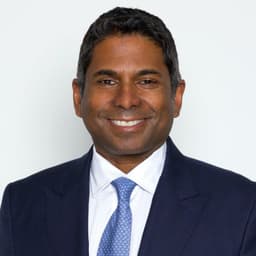
Rengan Rajaratnam
MBA
Co-Founder and Chief Product Architect, Cardioplace
Rengan brings over 25 years of experience across capital markets, AI-driven technology, and executive leadership. He is ex-SAC Capital and Morgan Stanley, led 4 exits as a C-level executive, scaled a direct-to-consumer brand from $0 to $100M, and served as CFO of a leading Latin American SaaS platform. He holds an MBA from Stanford University, completed the Oxford AI Programme, and holds three US patent applications in predictive AI systems. He is the reason the clinical vision became a working technology platform built to scale.
The Engineering Team
9 In-House Developers · Colombo, Sri Lanka
Cardioplace was built by a team of 9 in-house developers based in Sri Lanka, led by Duwargie Kugaraj, a full-stack engineer skilled in MERN, Java, AWS, and cloud architecture. Together they built the voice pipeline, the escalation logic, the provider dashboard, and the multilingual architecture. Their work is a reminder that world-class clinical technology does not have to wait for the communities that need it most.
This Is What We Believe.
We believe the most dangerous moment in cardiovascular care is not the emergency. It is the silence before it, when no one was watching.
We built Cardioplace to end that silence, in Ward 7, in Ward 8, and eventually everywhere else this gap exists.
Cardioplace · Supported by the DC Hospital Association · April 2026